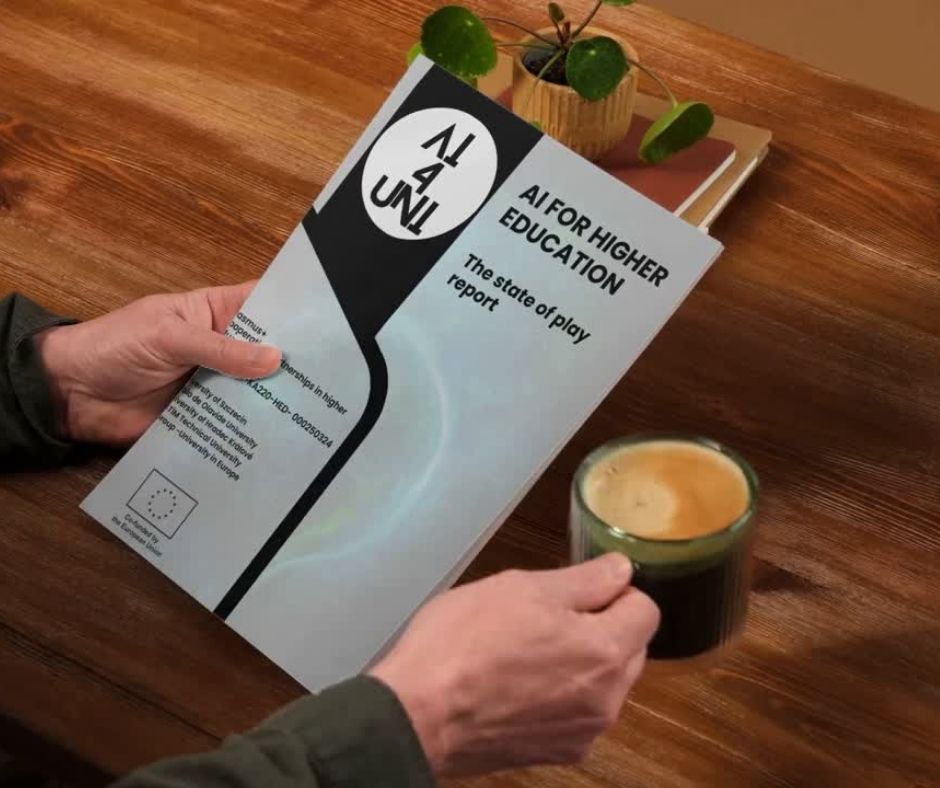
AI for HE – the state of play report
The state of play report is a final result of the WP2 activities conducted by the project team. It contains analysis of legal, practical and ethical implications of AI usage at the universities and a report with a summary of 10 interviews conducted with external stakeholders.
This report confirms that AI is rapidly increasing its influence across all sectors, including higher education, bringing both extraordinary benefits and significant risks. Internationally, there is a recognized global governance deficit concerning AI, underscoring the necessity for responsible and trustworthy intelligent systems.
In terms of Legislation and Ethics, the European Union is leading the way by implementing the AI Act, which establishes a uniform legal framework based on a risk-based approach (categorizing systems into unacceptable, high, limited, and minimum risk). The project consortium countries—Spain, Poland, Türkiye, and Czechia—are actively working to develop national AI strategies and align their proposed regulations with the EU’s requirements. Key ethical proposals from organizations like the EU and UNESCO emphasize that trustworthy AI must be lawful, ethical, and robust.
The analysis of the 30 interviews conducted by SGroup reveals several critical findings. The interviews aimed to explore how members of the three target groups (academic staff, administrative staff, and students) use and perceive AI, identifying concerns and training gaps to inform future AI4UNI training activities.
First, regarding usage and concerns, the most common use of AI across all university groups is writing assistance. However, the primary concern is the unreliability of AI output—such as hallucinations and fabricated references—which has resulted in a widespread sentiment of conditioned trust rather than blind acceptance. Data privacy and the negative impact of AI on learning (cognitive offloading) are also significant concerns.
Second, knowledge and training: While academic staff demonstrated the highest level of AI knowledge, both students and administrative staff expressed a high need for further training. Additionally, many participants were uncertain or unaware of their institution’s specific AI guidelines, revealing gaps in policy communication and awareness of implementation.
Finally, perceived usefulness: Perceptions of AI usefulness align closely with professional roles. Administrative staff value AI most for cost and time reductions, academic staff prioritize workflow improvement and enrichment, and students focus on general support and time-saving advantages.